
From Voice to Value: Why Patient Engagement Is Now a Strategic Capability
June 23, 2026
ESC Insights: Why Category Transformation Is the New Imperative
September 11, 2026From Voice to Value: Why Patient Engagement Is Now a Strategic Capability
June 23, 2026ESC Insights: Why Category Transformation Is the New Imperative
September 11, 2026
Cannes gave us plenty to talk about this year; incredible creativity, the recalibration of AI from a novelty to infrastructure, Oprah finally accepting her invitation to the Croisette, and ideas that continued to inspire and drive growth for global brands.
I loved seeing the breadth of work. It’s always wonderful to witness another year of creativity from countries around the world, and it reminds me why I love what I do.
Some of the standout campaigns included Supernova Adaptive, where adidas redesigned a running shoe alongside people with Down syndrome; The Wedding Rice, which transformed a centuries-old Greek tradition to tackle food waste; Three Words by AXA (still one of my favourite campaigns ever made), which changed every home insurance policy in France by adding "and domestic violence"; and Could Have Been a Heineken, which turned WhatsApp voice notes into beer coupons by embracing how we really communicate today.
All of this work lives in culture, and as “culture” has become such a buzzword, I wanted to unpack my take on it.
Getting Close to Real Life
Sometimes culture erupts into a moment that everyone wants to be part of (cue the KitKat Heist). But more often, it lives somewhere quieter; inside communities, experiences and everyday behaviours that rarely make headlines, but shape how people think, feel and act. You can see it in the work above: the experience of running with feet that don't fit the mould; the truth that we've replaced IRL time with friends by sending endless voice notes; the tiny missing detail of an insurance policy that became a lifeline; and a wedding ritual that unknowingly impacts food security. Understanding cultural tensions of the moment is where the most effective creative begins, and healthcare is no exception.
The work we did with The Cybersmile Foundation this year grew from exactly that. We watched a global conversation bubble up after Adolescence was aired on Netflix, and we listened to the quieter realities of young boys when it comes to harmful content on social media; “I don’t want to see it, it just appears on my feed.”
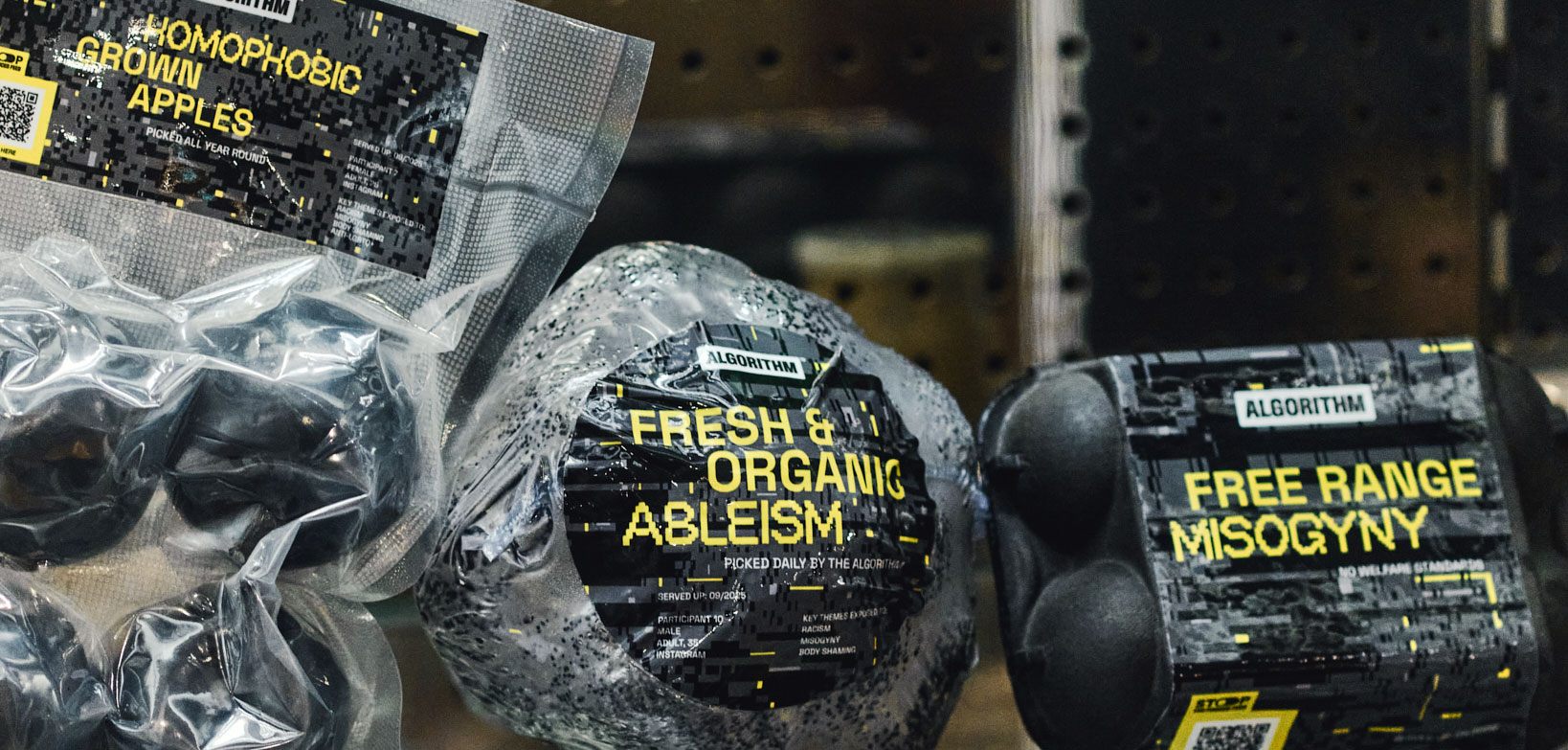
The conversation about online harm was growing, but the nuances of algorithmic harm were much less reported at the time. “Imagine if you saw that content in public - you’d be arrested!”. Why are standards different in the online world than to the real one? Our campaign was born from listening to real people, finding a friction, and dancing on it. We cracked open a different conversation, and we invited communities to participate and make change.
The Myth of the Mainstream
Healthcare is rapidly moving from a landscape that is HCP-centric to one increasingly shaped by people themselves. Patients are making health decisions on their own terms, using new technologies, peer communities and trusted voices to navigate. They're making health decisions with the same expectations they bring to every other part of their lives.
Today, the opportunity isn't to become more culturally reactive, it's to become closer to the realities that create culture in the first place, and then earning your place within it.
For years we've built communications around the idea of a "mainstream" audience. But the most effective work doesn't try to speak to everyone - it starts by understanding someone specific. That's why so many of this year's Cannes winners felt so powerful.
The brands creating the most effective work aren't trying to insert themselves into culture. They're already close enough to people to recognise the moments, tensions and behaviours that matter. They give people a way to take part and drive a movement anyone can join.
Healthcare has always demanded that level of understanding. Some of the most important conversations happen far away from traditional media and inside patient groups, online forums, advocacy networks and everyday conversations between people living with the same experience. Those conversations don't just inspire better communications - they lead to better ideas.
At Havas, we use proprietary tools to understand what we call the "three speeds of culture", helping us identify everything from deep societal shifts to fast-moving conversations. But tools only take you so far…
The real advantage comes from getting closer to people. When I spend an hour with a patient, what it unlocks creatively is nothing short of gold. You hear the language they use, the experiences they rarely speak about and the tiny truths that never make it into a research deck. That's where the best ideas begin.
The future of healthcare communications won't belong to the brands with the biggest media budgets or the loudest voices. It'll belong to the brands willing to understand people better than anyone else.
We’re no longer in the business of capturing attention; we’re in the business of earning it. And when people feel understood, they don't just engage with an idea, they carry it for you.